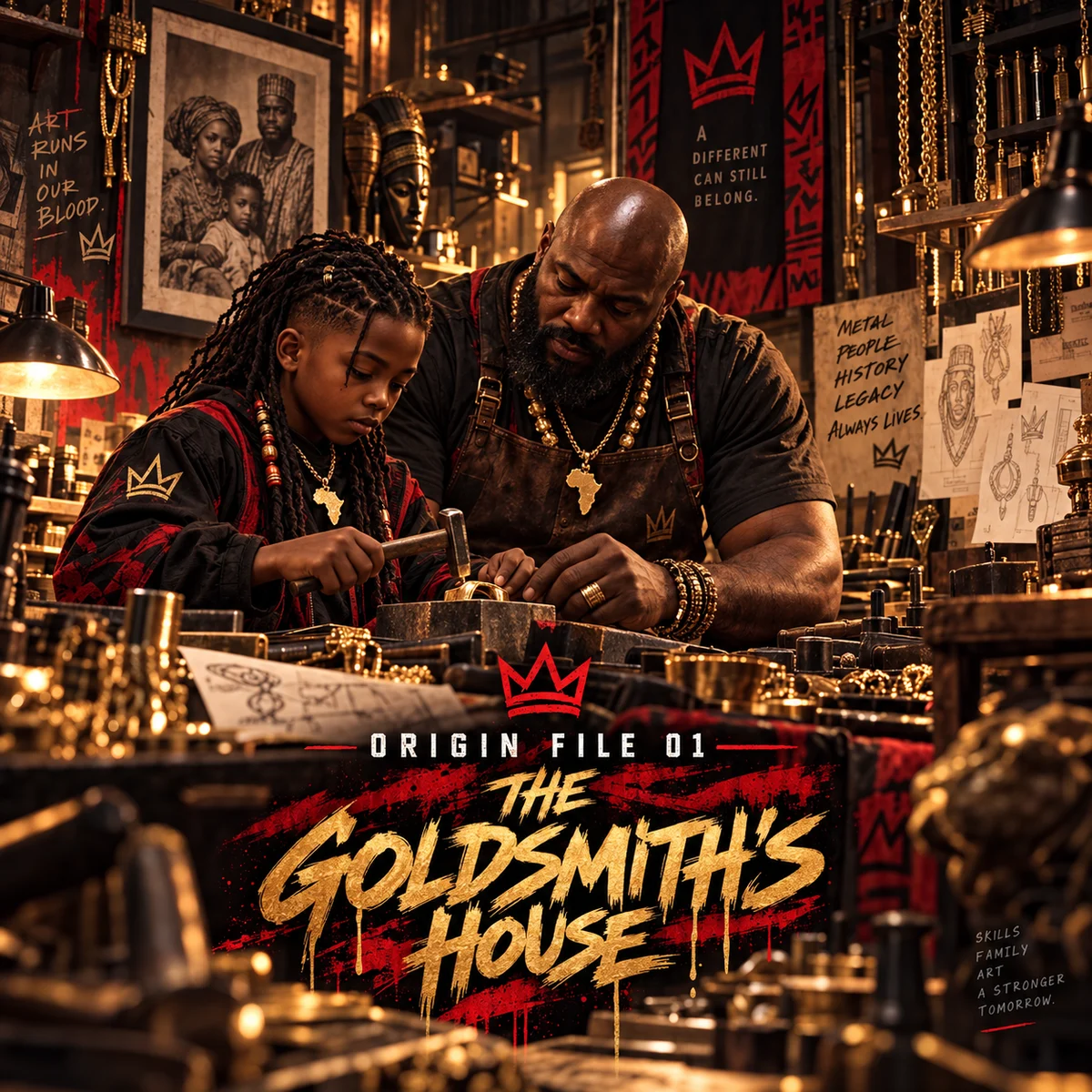
01 // CRAFTTHE GOLDSMITH'S HOUSE
Home, workshop and first classroom. Art and daily life were never separate.
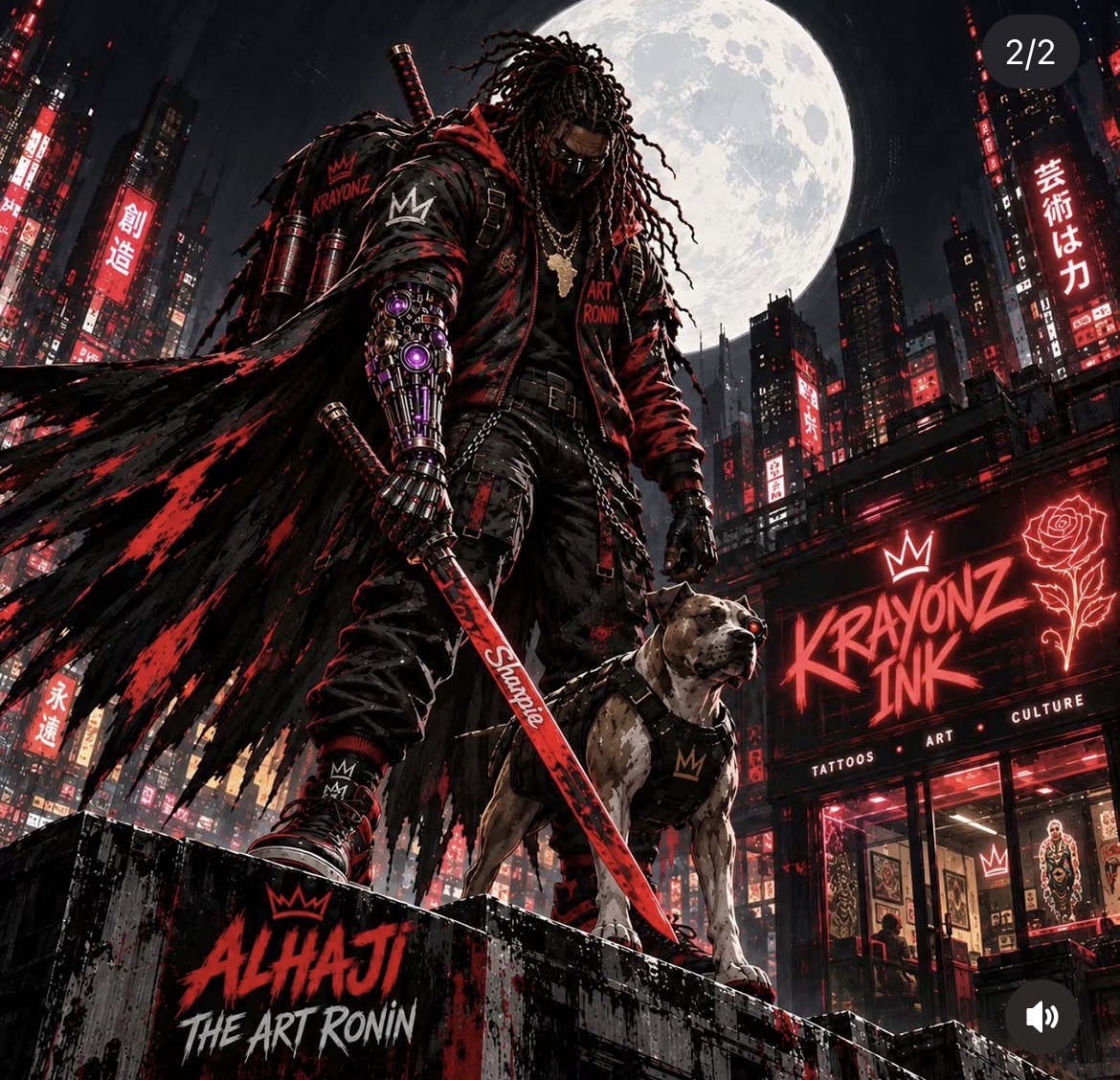
ALHAJI // THE ART RONIN
Artist. Builder. Designer. Technologist. None of those titles tell the whole story. The through line has always been simple: if I can imagine it, I can create it.
THE ORIGIN
I grew up with my father in his jewelry shop. He was from Sierra Leone and a certified master goldsmith. That shop was home, classroom and workshop all at once. I spent my time around tools, metal, precision and the kind of craftsmanship where your hands have to match the idea in your head.
My father was my first master. He taught me that creativity is not just inspiration — it is patience, discipline, problem solving and learning how to make something real.
ORIGIN FILES // VISUAL STORY
Six custom scenes trace the road behind KRAYONZ — family, African roots, D.C. street culture, Krayon Korner, the traveling tattoo years and the path that became The Art Ronin.
Home, workshop and first classroom. Art and daily life were never separate.
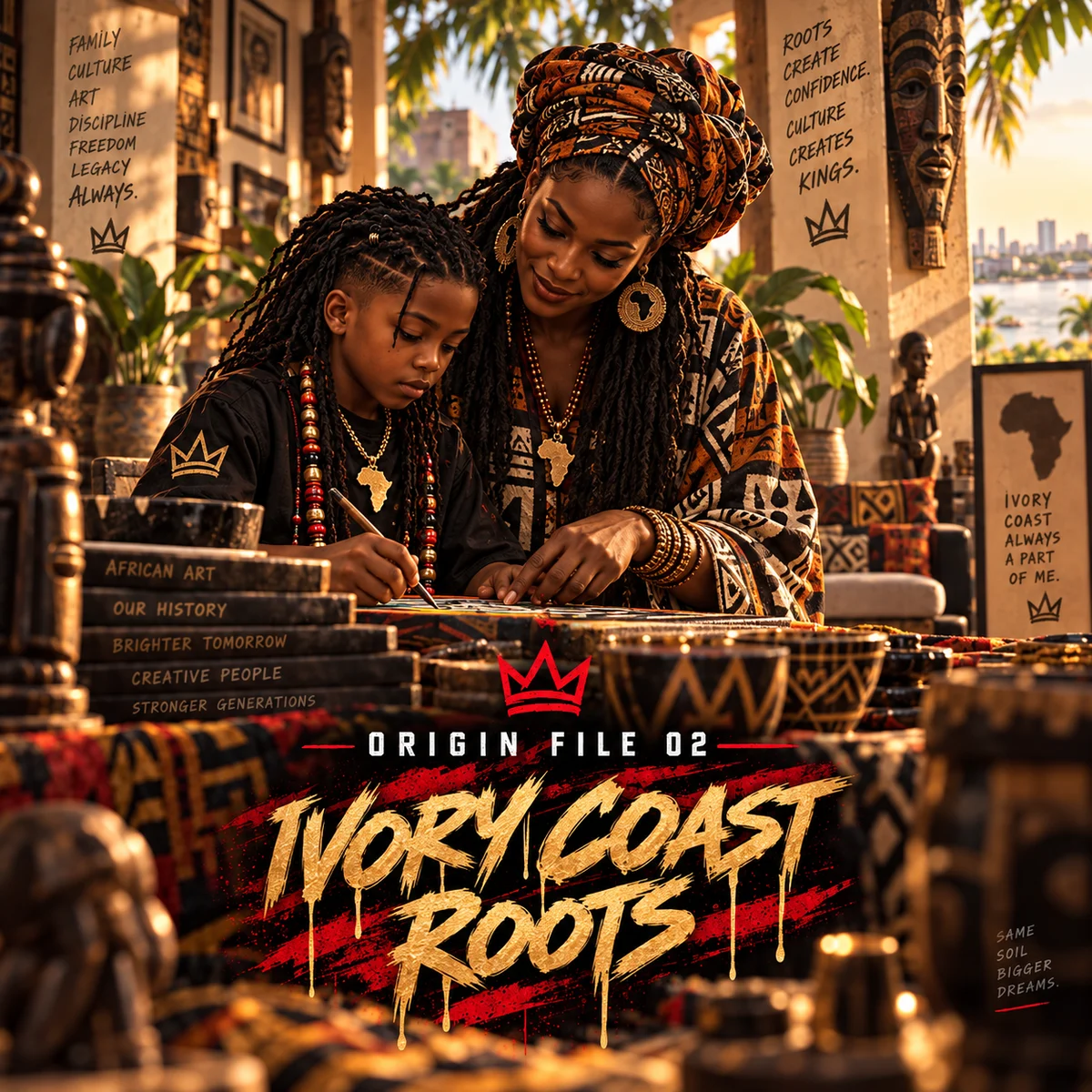
Culture, pattern, objects and color become part of the visual vocabulary.

Graffiti, hip-hop and being outside add rhythm, attitude and another language.
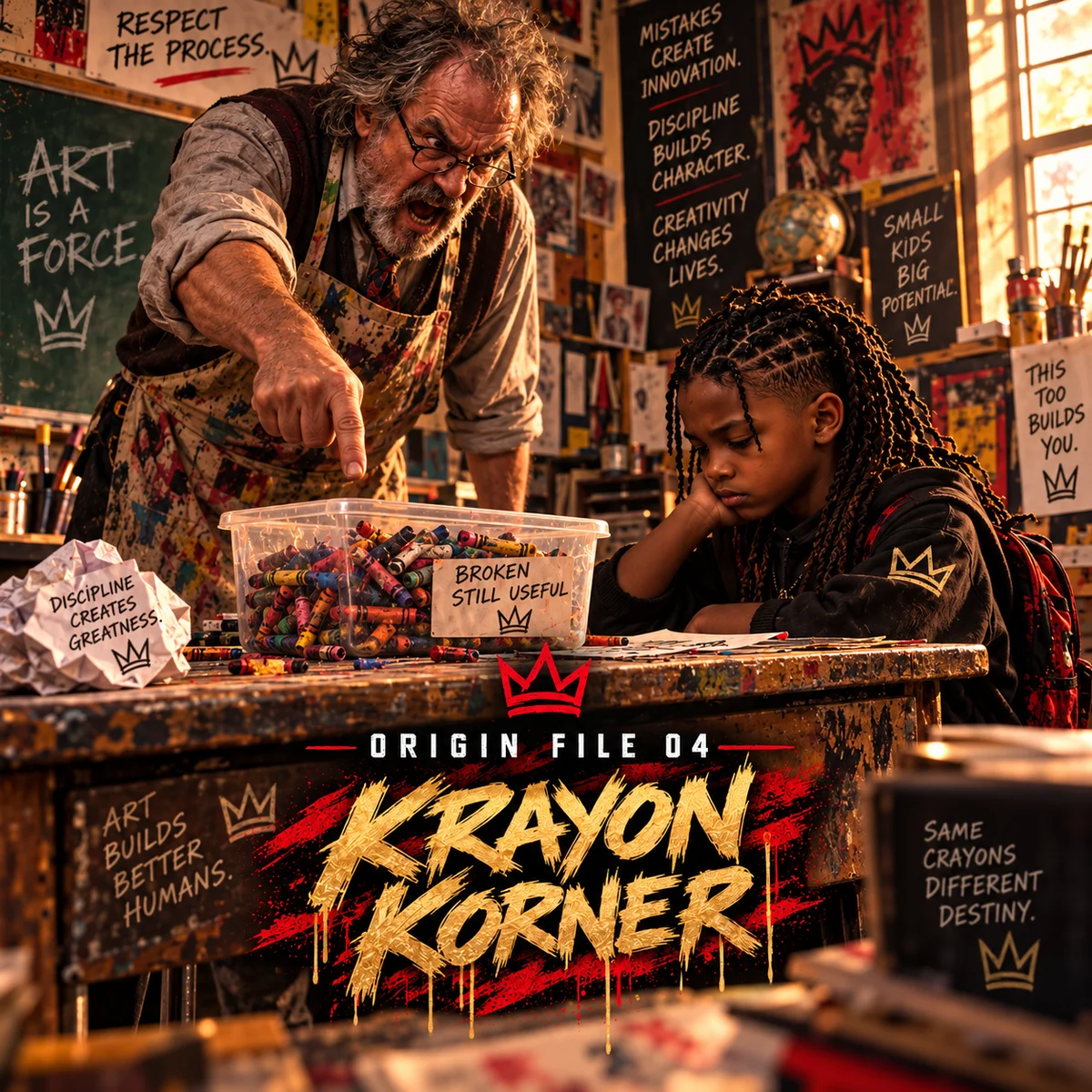
A beat-up punishment desk and a Tupperware of broken crayons become an unlikely beginning.
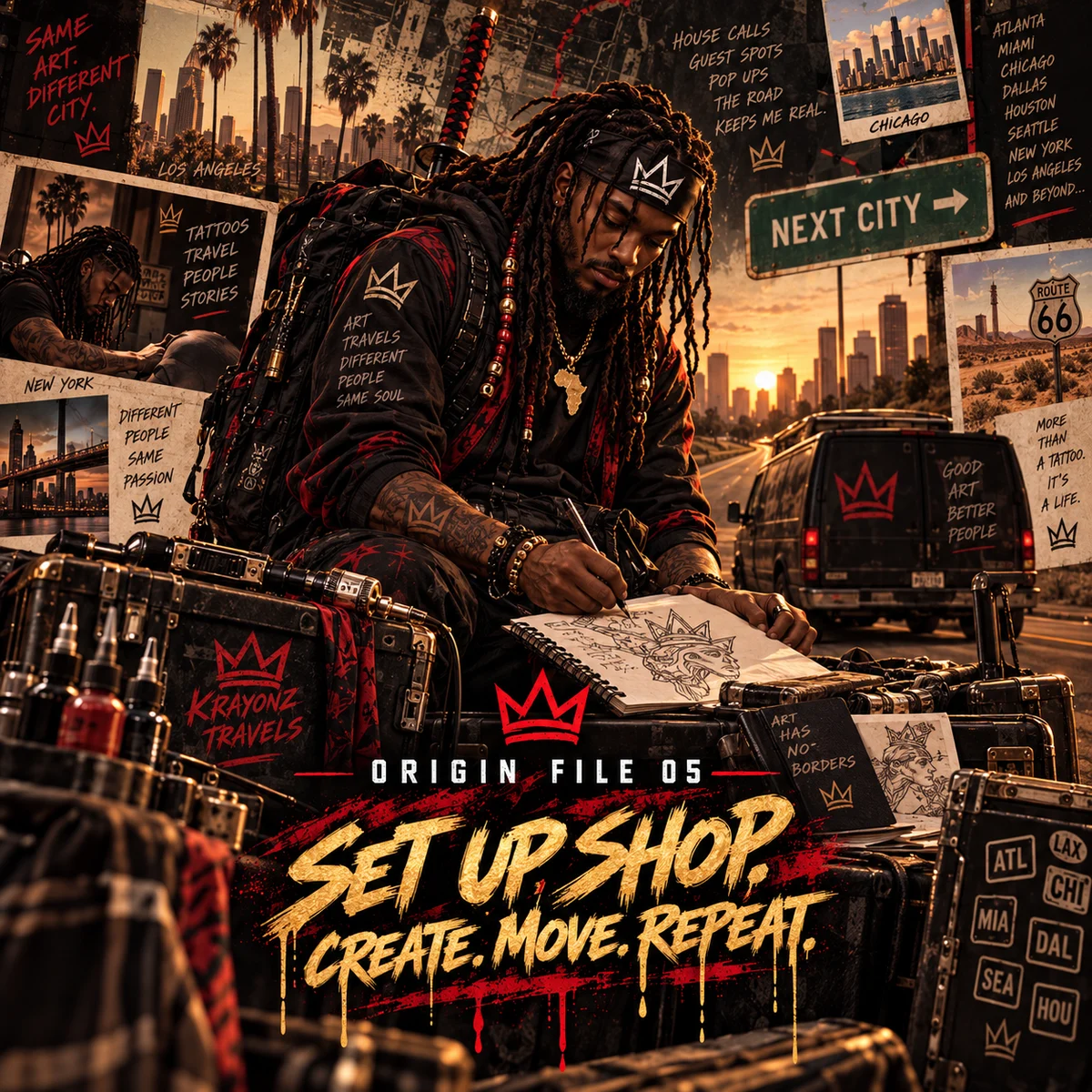
House calls, guest spots and constant travel turn art into survival, education and independence.
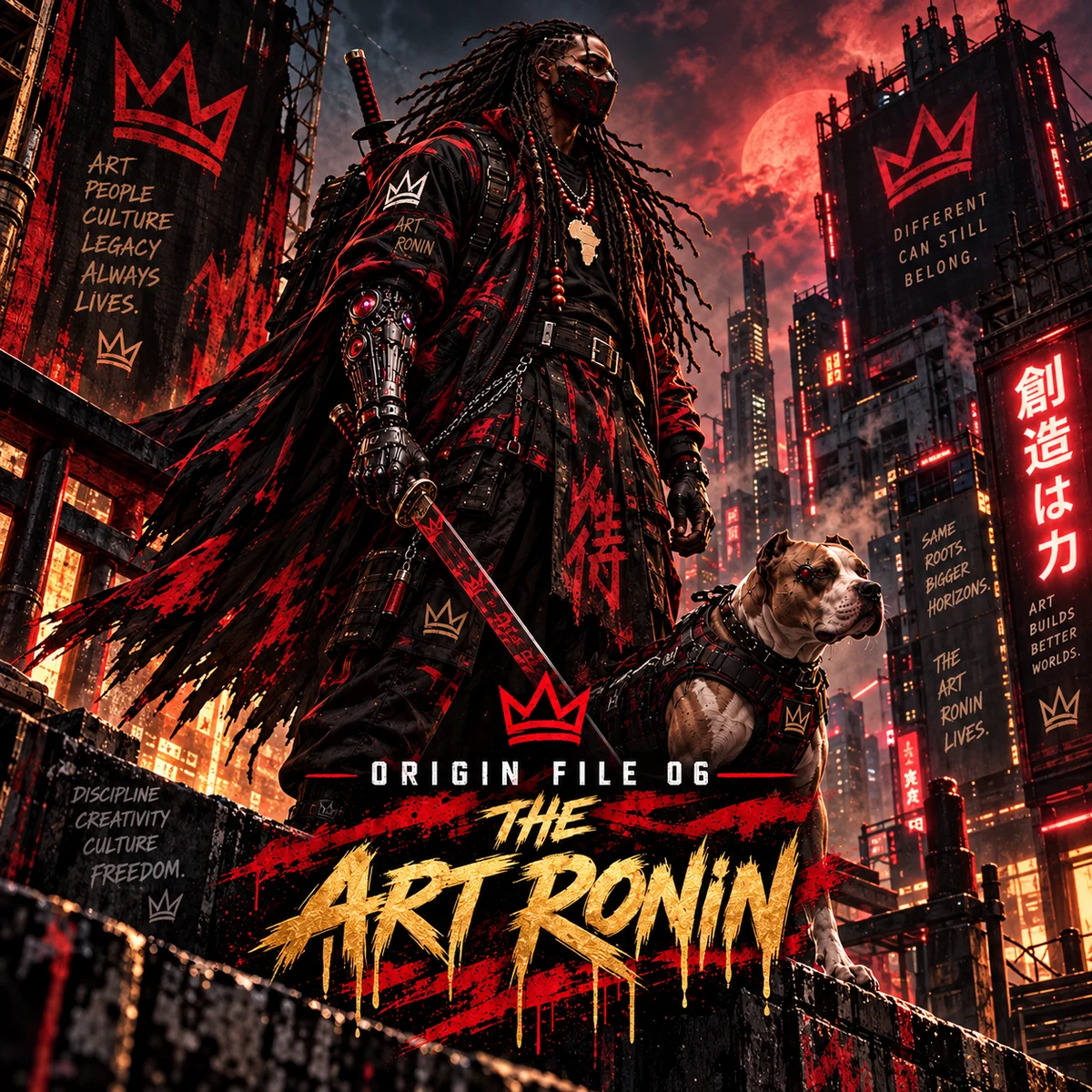
The roots stay African. The craft stays personal. The path becomes his own.
01 // ROOTS
My mother is from Ivory Coast and works in interior design. I did not grow up with her day to day, but from about five years old I spent summers in Africa. Those trips exposed me to African art, pattern, color, objects, spaces and culture in a way that stayed with me.
Back in the U.S., graffiti, hip-hop and street culture gave me another language. The work I make now sits somewhere between those worlds: inherited craft, African influence and the energy of the street.
02 // THE NAME
At Milton Hershey School in Pennsylvania, I had trouble sitting still and focusing in art class. When I got in trouble, my teacher would send me to a little desk called the Krayon Korner. It was a beat-up desk with a Tupperware container full of broken, used crayons.
It was supposed to be punishment. For me, it felt like freedom. I could sit there and draw whatever I wanted with whatever was available.
Perfect tools were never the point. Creating was.
Years later I used the name Krayon Korner for an after-hours art-gallery concept. That little desk eventually became the seed of KRAYONZ — a reminder that limitation can become style, and that you create with what you have.
03 // 2009 → FORWARD
In 2009, tattooing turned art from something I loved into something I could survive on. I already knew people from different cities through Milton Hershey School, so instead of waiting for one shop or one market to find me, I traveled. I tattooed in homes, took guest spots, carried my equipment from city to city and learned by working around different artists, clients and visual cultures.
That became the first real Art Ronin era before I ever used the name. I was nomadic, independent and living off the work itself — setting up wherever I could create, earning enough to keep moving, and picking up new techniques and influences along the way. Most people came to know me as a traveling tattoo artist, but the same instinct kept expanding into design, barbering, apparel, murals, jewelry, websites, vehicle graphics and physical spaces.
REAL-WORLD BUILDING
Over the years that approach has reached far beyond a tattoo chair. I have opened and redesigned shops, built visual identities, designed retail and commercial layouts, created murals and produced work for businesses and independent brands.
Projects have included designing the London Arabian space at Westfarms Mall in Connecticut, mural work at Parkville Market, design work connected to Stacks Customs Jewelers, commercial concepts in Miami and many smaller projects where the assignment was simply: figure out how to make the idea real.
This is not meant to be a résumé. It is the same practice expressed through different materials.
MIAMI // ARTWORK & DESIGN // CREATIVE BROTHERS
Before KRAYONZ, there was a broke apartment in North Miami, a front step, sketchbooks and music. Mr. Wett was working overnight room service then. After his shift he would stop by, sit outside with me, and we would draw and listen to music while I was still trying to figure out how to survive from art.
I eventually got a job working with him. I used that money to open my first shop, Artwork & Design — custom T-shirts, apparel, freelance graphics, flyers and mixtape covers. The shop became a safe creative space for Fweago Squad / Fweago Clan, a circle from the 6th Ave neighborhood in North Miami where street life and creativity lived side by side: rap, production, murals, design and whatever else somebody knew how to make.
Mr. Wett was part of those roots. T.I.M. moved around the same circle more as an affiliate, then started working with me because our obsession with art was similar. He painted sneakers and clothing and took the business of being an artist seriously. He began tattooing before I did, practiced on me, and made tattooing feel possible. Watching him earn real money from his art helped push me into the craft I would eventually become known for.
My father respected T.I.M.'s discipline too. Years later, the three of us have our own paths, our own brands and our own languages. We are not enemies. We are creative brothers with shared roots who keep one another sharp.
The people in Bionic KRAYONZ matter because they mattered in real life first. The art follows the life — never the other way around.
THE NAME // ART RONIN
A ronin is a samurai without a master. For me, that name is personal.
My father was the first person who taught me how to work with my hands and how seriously to take a craft. After he passed away, I no longer had my master. I still had everything he taught me.
The Art Ronin is the artist who carries that training forward while walking his own path — not tied to one shop, one city or one medium.
THE NEXT EVOLUTION
I have always been drawn to technology and gadgets — the imagination behind Knight Rider, spy technology, 007-style tools and machines that extend what a person can do. I build computers and have cybersecurity training and certifications spanning Google and Microsoft/Azure.
To me, bionic means combining technology with raw human ability rather than replacing it. Flesh and machine. Instinct and information. Handcraft and digital tools.
Bionic KRAYONZ is where all of those pieces finally meet: African roots, goldsmith-level craft, graffiti, hip-hop, tattooing, design, storytelling, collaboration and technology.
THE WORLD CAN EXPAND
Bionic KRAYONZ follows my life first. Alhaji / The Art Ronin is the main character, and the people who genuinely cross my path can enter the story without losing their own identities or brands. Over time, other creators may build their own Bionic interpretations too — but the KRAYONZ story stays anchored in the life that created it.
THE TOOLS CHANGE. THE CANVAS CHANGES. THE MISSION DOESN'T.